Zanskar Frozen River Trek
Rs. 32600 per personBeyond Adventure
- The Zanskar Frozen River Trek, known universally by its poetic name "The Chadar" (meaning a blanket or sheet of ice), is not merely a trek; it is a high-stakes survival odyssey through one of the most hostile and beautiful environments on Earth. Located in the remote Leh district of Ladakh, this 9-day expedition takes place only during the sub-zero window of January and February. When temperatures plummet to -30°C, the mighty Zanskar River—a fierce, untameable tributary of the Indus—surrenders to the cold, transforming into a shimmering, translucent highway of ice. This is a journey through a vertical gorge where the elements dictate the terms of movement, and the history of a civilization is written in the cracks of a frozen river.
- The expedition begins in Leh (3,500m), a city of whitewashed stupas and barren brown mountains that, in winter, becomes a desolate yet beautiful outpost of silence.
- The Medical Threshold: Acclimatization here is not a suggestion; it is a survival protocol. Trekkers undergo two days of rigorous adaptation, culminating in a mandatory government medical checkup. At the SNM Hospital, doctors verify oxygen saturation and heart rates. This administrative hurdle serves as a stark reminder: the Chadar is an environment where the human body is pushed to its absolute physiological limits.
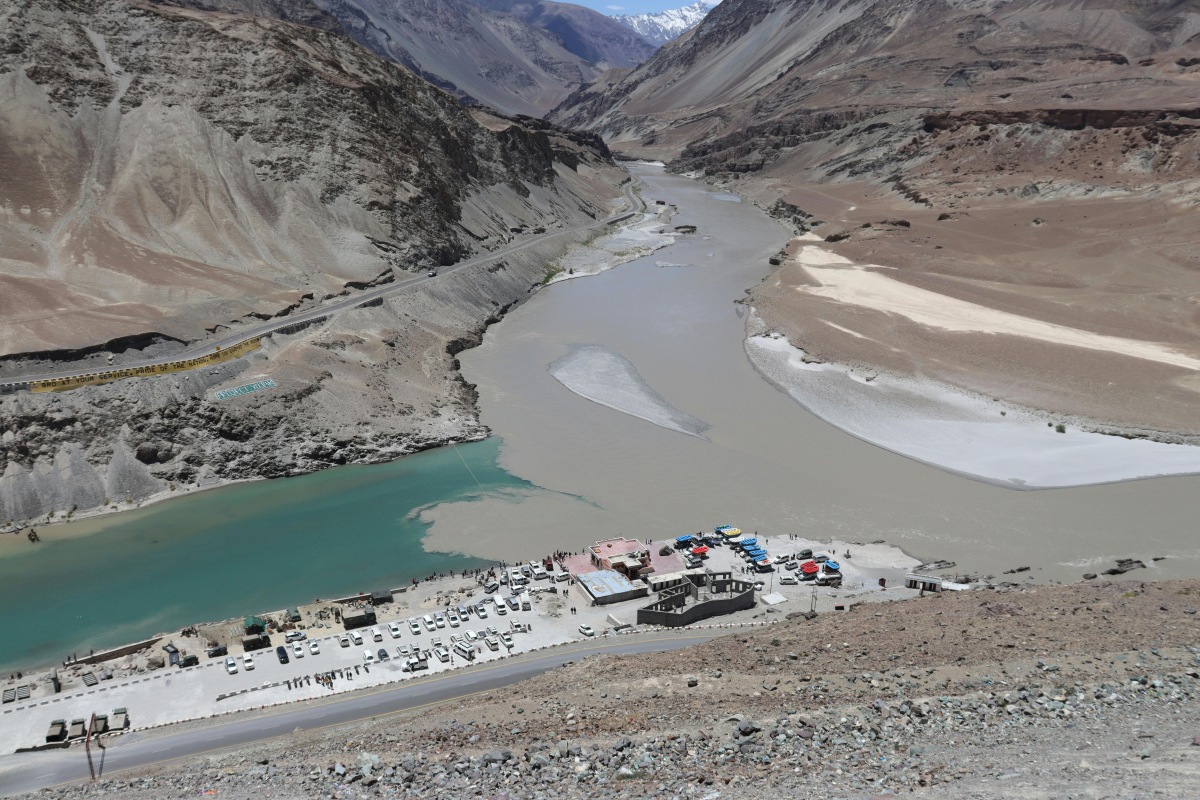
- The Transit of Confluences: Leaving Leh, the drive to the trailhead at Tilado is a visual feast of Ladakhi landmarks. You pass the Magnetic Hill, where gravity seems to falter, and the sacred Gurudwara Pathar Sahib. The highlight of the drive is the Sangam at Nimmu—the confluence where the emerald Indus meets the freezing Zanskar. Here, you witness the river beginning to choke with "pancake ice," signaling your entry into the frozen kingdom.
- Stepping onto the Chadar at Tilado is like stepping onto another planet. The river is a living, breathing entity that changes its form every hour.
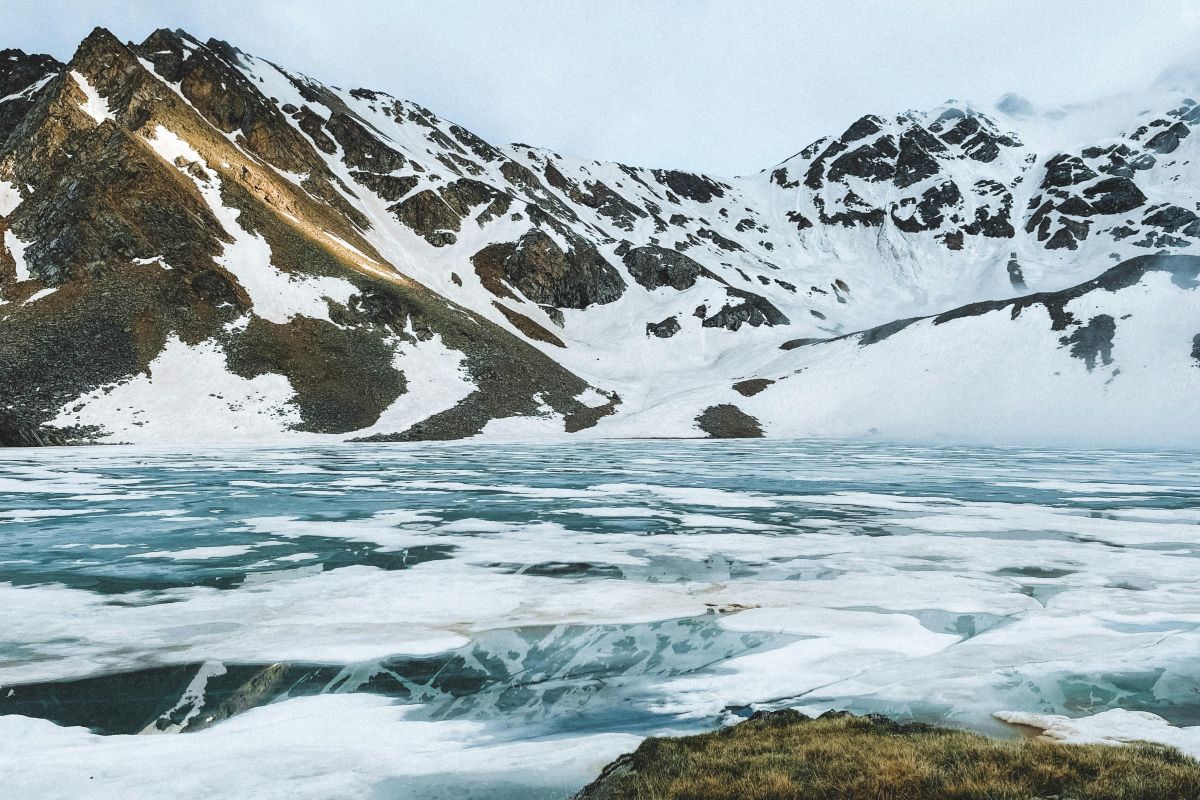
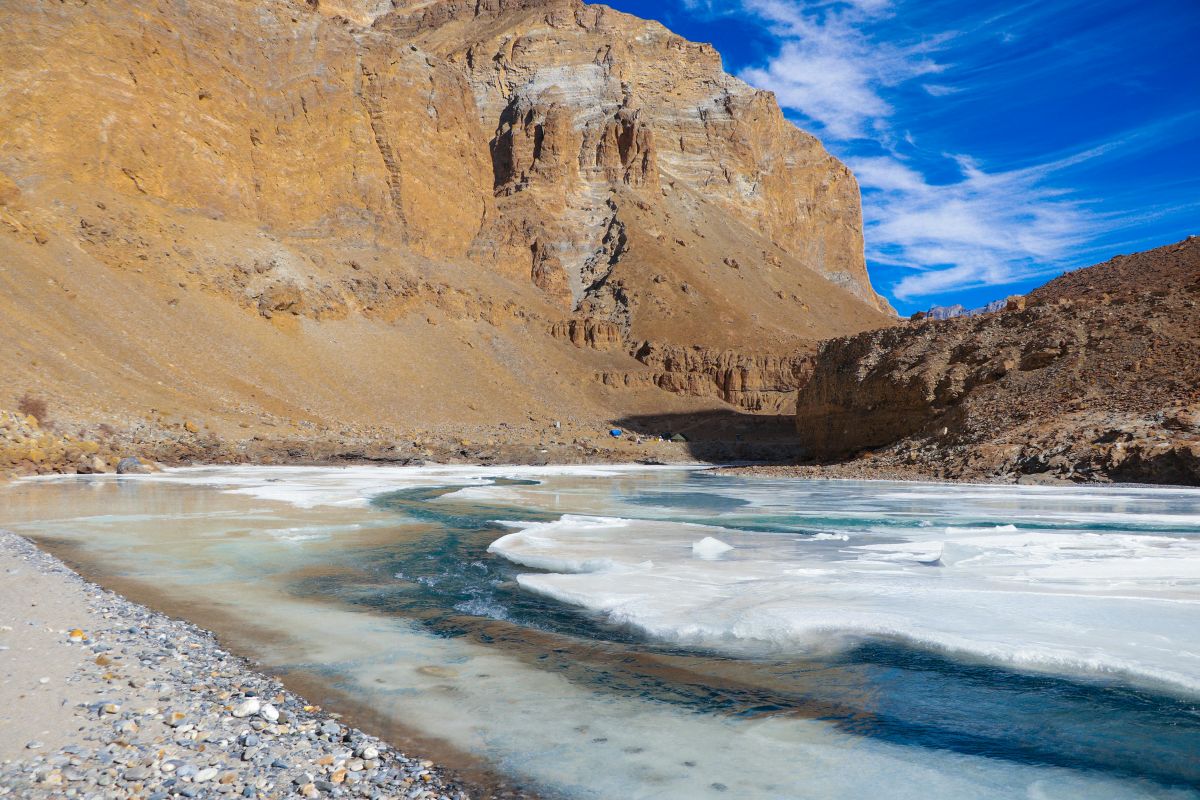
- The Spectrum of Frozen Water: The ice is never uniform. In some stretches, it is "Tsanth"—hard, dark, glass-smooth ice that reveals the dark, rushing water just inches beneath your feet. In others, it is covered in a fresh mantle of powder snow, providing a welcome grip. The most treacherous sections involve "Chirp"—thin, fragile ice that requires trekkers to use the "Penguin Walk," a flat-footed, sliding gait that has become the hallmark of the Chadar veteran.
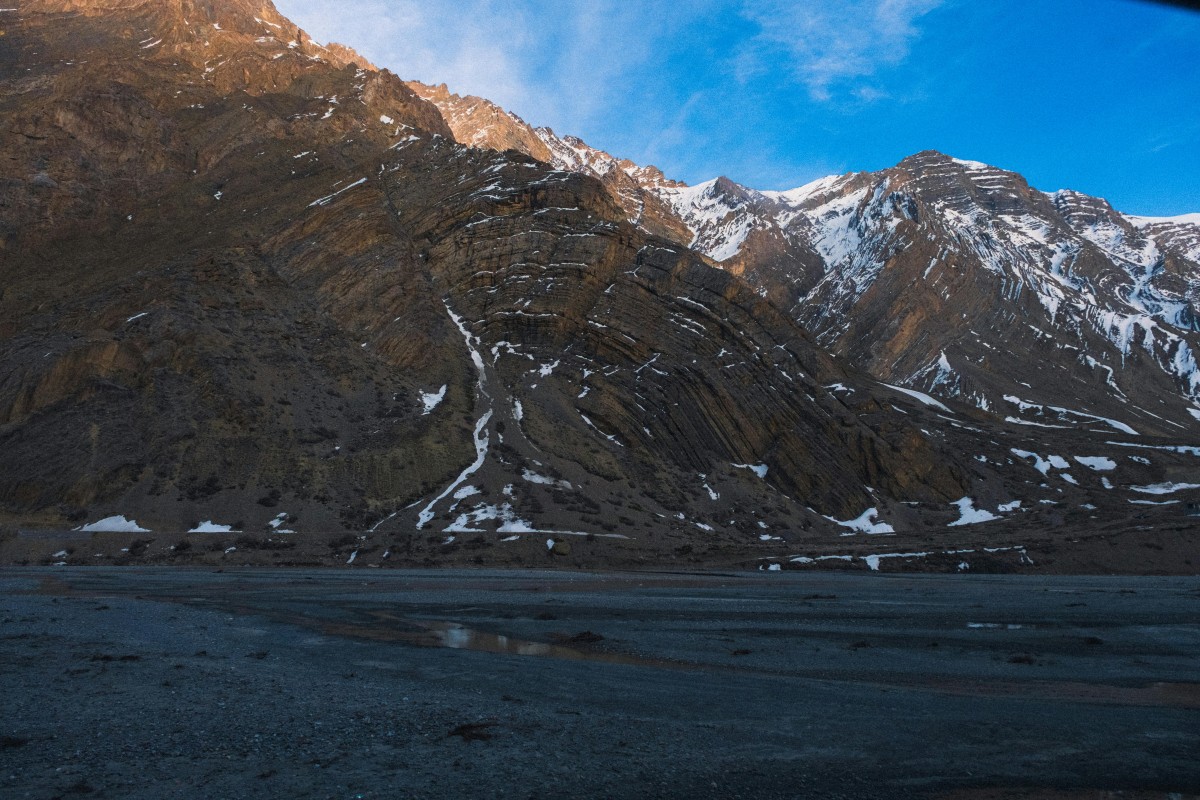
- The Vertical Gorge: The Zanskar Gorge is a geological masterpiece. Near-vertical walls of ancient metamorphic rock rise up to 600 meters on either side, cutting off the sun for most of the day. This creates a "Cold Trap" where temperatures remain significantly lower than in the surrounding valleys, preserving the ice but testing the mental grit of the trekker.
- For centuries, the Chadar was not an adventure destination; it was a lifeline of necessity. Before the advent of modern connectivity, the people of the Zanskar Valley were isolated by heavy snowfall on the high passes.
- The Trade of Survival: For generations, Zanskari villagers would walk the frozen river for over a week to reach Leh. They carried butter and cheese to trade for salt and grain. Today’s trekkers walk in the footsteps of these "Ice Warriors." Staying in the same caves (known as Zanskar-pa) that have sheltered travelers for centuries adds a profound layer of cultural gravity to the expedition.
- The Wisdom of the Sled: You will see local porters effortlessly pulling traditional wooden sleds across the ice. Their ability to "read" the river—detecting weak spots by the color of the ice or the sound of the water beneath—is a masterclass in indigenous knowledge.
- The ultimate objective and spiritual heart of the Chadar Trek is the Nerak Frozen Waterfall.
- The Arrested Cascade: Standing at the base of Nerak is a transcendental experience. A massive waterfall, hundreds of feet high, has been caught in mid-descent, frozen into a silent, blue-white curtain of ice. The sheer scale of this "Frozen Moment" is a testament to the absolute power of the Ladakhi winter.
- The Bridge of Ages: Nearby, an ancient wooden bridge connects the two sides of the gorge, leading toward the remote Nerak village. Standing here, surrounded by the crushing silence of the gorge and the crystalline beauty of the falls, trekkers experience a sense of triumph and awe that is unmatched by any other Himalayan journey.
- The Chadar is a fragile ecosystem. With the changing climate and the construction of the new Zanskar highway, the traditional "Frozen Highway" is undergoing a rapid transformation. To trek the Chadar today is to witness a passing era of Himalayan history. It is a journey that demands total presence; you cannot daydream on the ice. The reward is a profound mental clarity and a memory of a landscape that is both terrifyingly cold and hauntingly beautiful. You return from the Chadar not just as a trekker, but as someone who has survived a dance with the winter elements.
- MAJOR ATTRACTIONS:Walking on the frozen Zanskar River (Chadar), Nerak frozen waterfall — highlight of the trek, Towering Zanskar gorge walls rising up to 600 m, Indus-Zanskar river confluence at Nimmu, Gurudwara Pathar Sahib, Magnetic Hill, Tibb Cave campsite, Gyalpo campsite, Shingra Koma campsite, Zanskari cultural heritage and nomadic winter tradition
Duration: 9 Days, 8 Nights
Month: January to February
Region: Ladakh
Trek Difficulty: Difficult
Trek fee: 32600
Max Altitude: 11,150 ft
Trek distance: 62 km
Best Period:
Mid-January to Mid-February
Stay:
Tented Camps and Caves
Railway Head:
Jammu Tawi Railway Station
Food:
Veg + Eggs
WHO CAN JOIN
Age Requirement :
- Minimum Age: 13 years and above
- Experience: Prior high-altitude trekking experience is strongly recommended for this trek. At least one previous winter trekking experience is highly advantageous. Trekkers must be physically and mentally prepared for extreme cold conditions down to -30°C, long days on ice, and remote wilderness camping. If participants have any medical condition, it is highly recommended to consult a doctor and inform us in advance so we can arrange logistics accordingly.
- Fitness: A mandatory government medical examination is conducted in Leh before the trek begins — oxygen saturation, blood pressure, and heart rate are checked, and only medically cleared trekkers are permitted to proceed. Pre-existing conditions such as cardiac issues, chronic respiratory disorders, high blood pressure, or any history of acute mountain sickness must be disclosed before joining. This trek is conducted in extreme cold at high altitude and is not suitable for individuals with unmanaged serious health conditions.
Fitness Criteria
- The trekker should have sufficient stamina to cover 5 km by jogging in 35 minutes without stress.
- If the trekker wants to carry a backpack, he/she should be able to carry a 10–12 kg backpack.
- If a trekker's BMI is more or less than the normal range (18–29), please consult our Trek Coordinator before booking.
How to Reach
Options to Reach
By Air: Fly into Kushok Bakula Rimpochhe Airport (IXL), Leh, well connected to Delhi, Mumbai, Chandigarh, and Srinagar. In winter, air is the only option to reach Leh as all mountain highways are closed due to heavy snowfall. Book early morning flights from Delhi for best availability in peak Chadar season (January–February).
By Train
Nearest major railhead is Jammu Tawi Railway Station, well connected to Delhi and other major cities. However, road access from Jammu to Leh is closed in winter — flying into Leh is the only viable option during the Chadar season.
Journey Itinerary
Arrival at Leh
Acclimatization Day at Leh
Acclimatization Day at Leh
Leh to Tilado - Trek to Tsomo Paldar (First day on Chadar)
Tsomo Paldar to Gyalpo
Gyalpo to Tibb Cave
Tibb Cave to Nerak Waterfall and Return to Tibb Cave
Tibb Cave to Gyalpo
Gyalpo to Tilado - Drive to Leh
Inclusions & Exclusions
Included
- Stay in tented camps and natural caves throughout the trek
- All meals (Veg + Eggs) during the trek
- Professional trek leader and experienced Chadar support team
- Gumboots and crampons on loan for the duration of the trek
- First aid kit and emergency oxygen
- Forest and river trekking permits
- Mandatory government medical examination in Leh
- Transportation from Leh to Tilado and return
- Completion certificate
Excluded
- Insurance
- Food and accommodation in Leh during acclimatization days
- Personal winter trekking gear and clothing
- Transport from home city to Leh
- Emergency evacuation charges (helicopter rescue)
- Offloading and porter charges for personal bags
- Tips and gratuities for support staff
Kids Guidelines
- • The minimum age for this trek is 13 years.
- • Trekkers between 13 to 17 years must be accompanied by a parent or guardian throughout the trek.
- • A disclaimer form signed by a parent or guardian is mandatory for all trekkers below 18 years.
- • A doctor's fitness certificate is mandatory for all trekkers below 18 years and above 60 years.
- • All trekkers regardless of age must pass the mandatory government medical examination in Leh before being permitted to proceed on the trek.
Captured Moments

Explore More Adventures

The Langtang Valley Trek, often called the "Valley of Glaciers," is a resilient and heart-stirrin...

The Gosaikunda Trek is a breathtaking alpine journey that leads to a cluster of sacred high-altit...

The Helambu Trek is the perfect "short and sweet" Himalayan adventure located surprisingly close ...
Happens, We're There
On-ground teams and real humans supporting you, before, during, and after your tour. Help when it truly matters.
Rating & Reviews
Share Your Experience
Begin Your Adventure Journey With Us
Trek through scenic trails, conquer new heights and experience the thrill of nature with unforgettable adventures in the great outdoors.
