Ali Bedni Bugyal Trek
Rs. 20000 per personBeyond Adventure
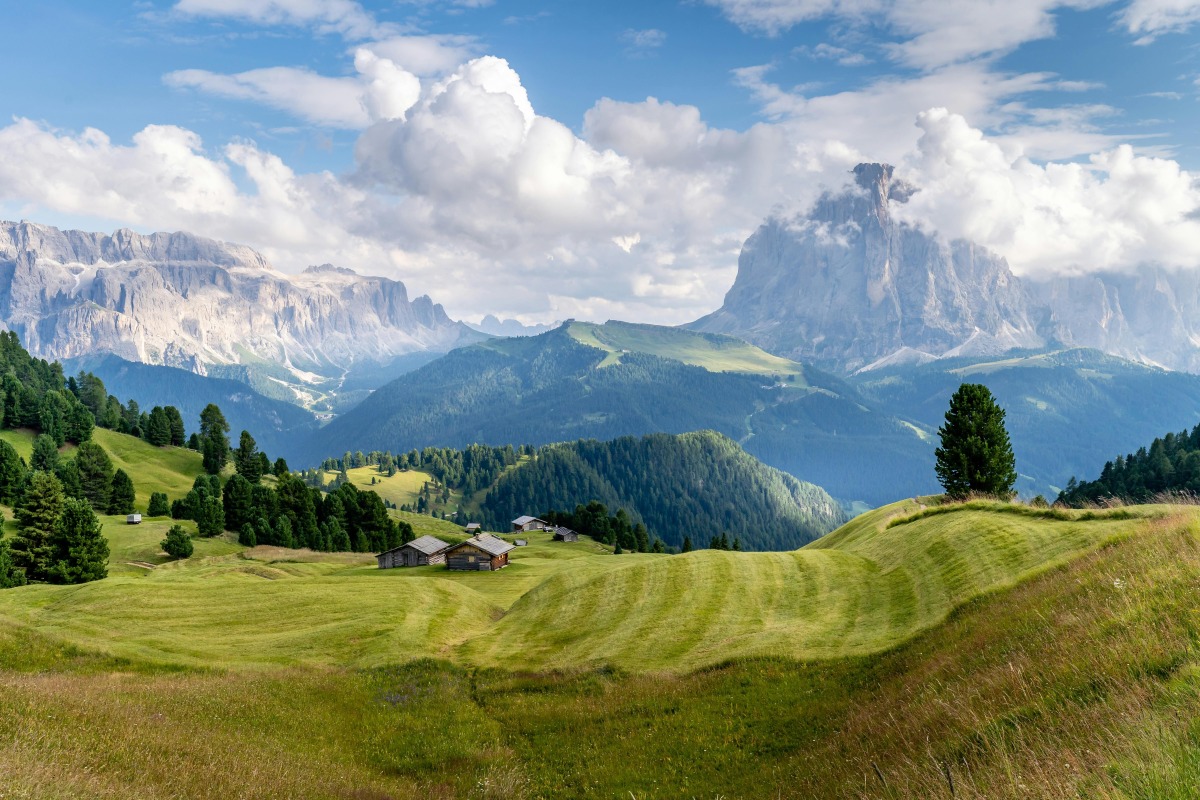
- Ali Bedni Bugyal Trek is one of the most enchanting and celebrated high-altitude meadow treks in the Garhwal Himalaya, leading adventurers through the magnificent landscapes of the Chamoli district in Uttarakhand to a pair of vast alpine meadows that are widely regarded as among the most beautiful in the entire Indian Himalayan region. The twin bugyals of Ali and Bedni, situated at elevations of approximately 3,500 and 3,350 meters respectively, form a rolling, interconnected expanse of high-altitude grassland that offers panoramic views of an extraordinary array of Himalayan peaks, including Trishul, Nanda Ghunti, Mridula, and on the clearest days, the distant white rampart of the Kedarnath range shimmering on the horizon. The word "bugyal" in the local Garhwali language refers to high-altitude meadows, and the Ali Bedni Bugyals are the finest and most famous examples of this distinctive ecological and landscape type in the entire Garhwal region.
- The trek begins from Wan village, a charming settlement in the Nandakini Valley of the Chamoli district that serves as the gateway to the Ali Bedni Bugyal area and provides an ideal introduction to the cultural and natural world of the Garhwal Himalaya. Wan, situated at approximately 2,440 meters, is a traditional Garhwali village whose stone and timber houses, surrounded by fields of buckwheat, potato, and barley, reflect centuries of agricultural adaptation to the demands and opportunities of life in the mountain environment. The village is inhabited by communities of Garhwali farmers and shepherds whose relationship with the high bugyals is intimate and ancient, as the meadows have served as summer pastures for their livestock for as long as anyone can remember, and the seasonal migration between the valley villages and the high pastures is a fundamental rhythm of local life that continues to this day.
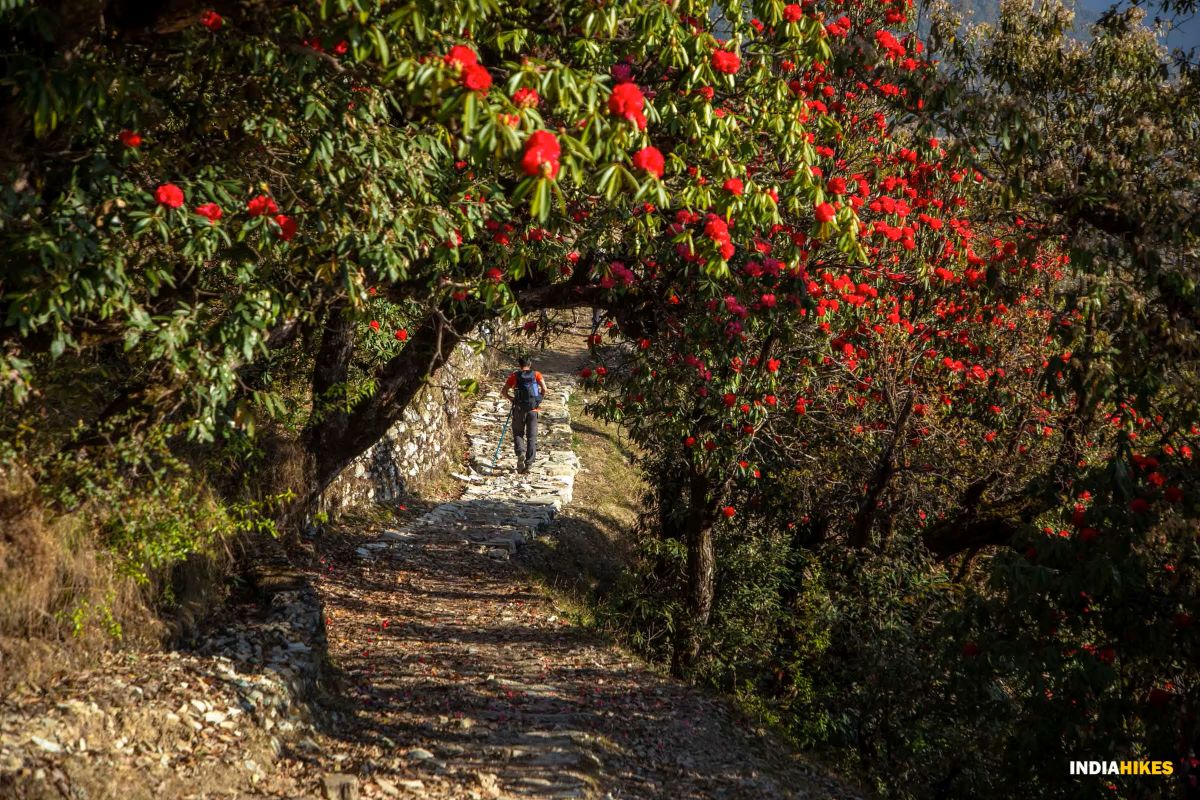
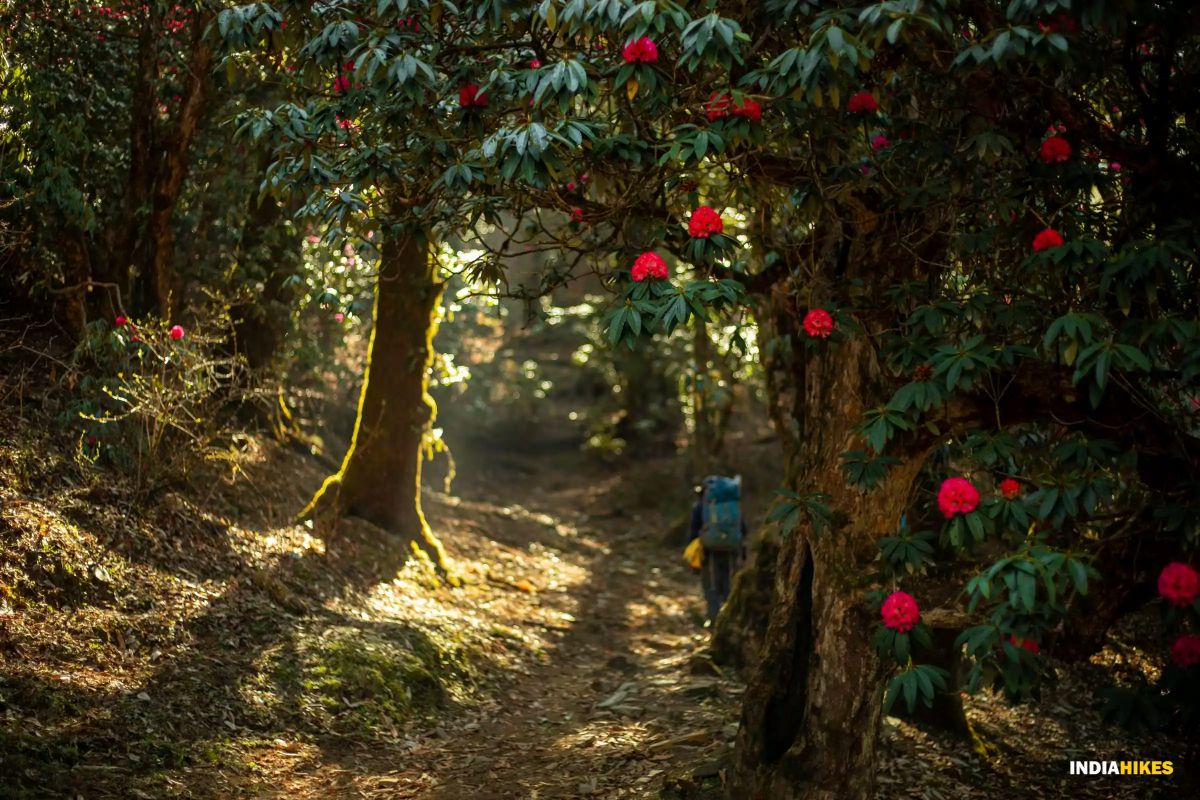
- The trail from Wan ascends initially through dense mixed forest of oak, rhododendron, and burans, the Himalayan tree rhododendron whose deep red blooms in April and May transform the forest into a spectacle of natural color that is one of the defining visual experiences of the trek in spring. The burans tree, whose flowers are used to make a distinctive local juice called buransh, is the state tree of Uttarakhand, and its presence throughout the forests of the Ali Bedni approach gives the trek a distinctive Garhwali character. The forest birds are particularly active and varied in this zone, with the koklass pheasant, the kalij pheasant, various species of laughingthrush, and numerous flycatchers and warblers contributing to a constant and joyful natural soundtrack.
- As the trail climbs above the forest zone, the landscape opens out dramatically and the character of the trek changes entirely. The transition from the enclosed intimacy of the forest to the vast, open spaces of the high alpine zone is one of the most emotionally powerful moments of the entire journey, with the sky suddenly expanding to fill the entire upper field of vision and the full panorama of the surrounding mountain landscape revealed in a single, sweeping revelation. This moment of spatial liberation, of stepping out of the green tunnel of the forest into the immensity of the high Himalayan landscape, is something that trekkers who have experienced it describe with a consistent sense of wonder and gratitude that speaks to its deep psychological impact.
- The Ali Bugyal, the first of the two great meadows encountered on the trek, is a landscape of extraordinary beauty and scale. The meadow extends across a series of gentle, rolling hills at approximately 3,500 meters, its surface covered in a carpet of fine alpine grasses, sedges, and wildflowers that changes in composition and color with the advancing season. In June and early July, the meadow is at its most floral, with dozens of species of alpine plants in simultaneous bloom creating a natural tapestry of remarkable richness and variety. The primulas, potentillas, anemones, and numerous other species that carpet the Ali Bugyal floor in summer have been attracting botanists and naturalists for generations, and the meadow is rightly regarded as one of the finest wildflower displays available to trekkers anywhere in the Indian Himalaya.
- The views from the Ali Bugyal are the defining feature of the trek for many visitors, and they are indeed extraordinary. The Trishul massif, whose three peaks suggest the trident of Lord Shiva and whose highest summit reaches 7,120 meters, dominates the northern horizon in a display of mountain grandeur of overwhelming scale. The Trishul peaks are of particular significance in the history of Himalayan mountaineering, as the summit of Trishul I was the first peak above 7,000 meters to be climbed, by the British expedition of 1907 led by Dr. Tom Longstaff. Standing in the Ali Bugyal and looking up at these immense, glaciated peaks that tower thousands of meters above the meadow creates a profound sense of the relative scale of human existence against the ancient, elemental permanence of the high Himalaya.
- Beyond Trishul, the view from Ali Bugyal encompasses an extraordinary arc of Himalayan peaks that stretches across the entire northern and eastern horizon. Nanda Ghunti, at 6,309 meters, is a beautiful and technically demanding peak whose graceful summit pyramid is clearly visible to the northeast. The more distant peaks of the central Garhwal Himalaya, including the Kedarnath group and the summits of the Badrinath area, add further layers of visual depth to the panorama on the clearest days. The quality of the light in these high meadows, unfiltered by pollution or humidity in the thin mountain air, gives the views an intensity and clarity that is quite unlike the softer light of lower elevations and that makes even familiar mountain forms appear freshly minted and brilliant.
- The Bedni Bugyal, reached after a short walk from Ali Bugyal across the connecting terrain, is in some respects even more beautiful than its twin, with the addition of the Bedni Kund lake providing a reflective surface that mirrors the surrounding peaks and sky in a display of natural grandeur. Bedni Kund, a sacred lake at approximately 3,354 meters, is associated in the Hindu religious tradition with the Pandavas of the Mahabharata epic and is an important pilgrimage site for the communities of the surrounding region. The lake's dark waters, ringed by the vivid green of the meadow and set against the backdrop of the Trishul peaks, create one of the most compositionally perfect natural scenes in the entire Garhwal Himalaya, a view that has been reproduced in countless photographs and paintings and that retains its power to move and inspire even after multiple viewings.
- The meadow around Bedni Kund has a distinctive atmosphere that combines natural beauty with spiritual significance in a way that is characteristic of the sacred landscape tradition of the Garhwal Himalaya. The small temple at the lake's edge is tended by a pujari during the pilgrimage season, and the presence of pilgrims making their devotions alongside trekkers enjoying the natural scenery creates a community of purpose and appreciation that transcends the conventional distinctions between religious and recreational motivations. Both pilgrims and trekkers are, in their different ways, responding to the same fundamental human experience of encountering something larger and more enduring than themselves in the presence of the great mountains.
- The camping experience at Ali and Bedni Bugyals is one of the finest in the Indian Himalaya. The vast, open meadows provide expansive, level camping areas with unobstructed views in every direction, and the quality of the air, the silence broken only by the sound of wind and water, and the extraordinary night sky visible from these high altitudes all contribute to a camping experience of exceptional quality. The sunsets at the bugyals are famous throughout the Garhwal trekking community, with the declining sun painting the Trishul peaks in progressively warmer shades of gold and orange and rose before the final dramatic moment when the last light touches the highest summits and the sky deepens to the dark blue of Himalayan night. The stars that emerge as the sky darkens are visible in extraordinary numbers and brilliance at this altitude, with the Milky Way appearing as a broad, luminous band that spans the entire sky from horizon to horizon.
- The best seasons for the Ali Bedni Bugyal Trek are late April to June and September to November. The spring season, when the rhododendron forests are in bloom and the meadows are beginning to come alive after the winter snows, offers the combination of floral spectacle and snow-capped mountain backdrop that many consider to be the most beautiful the trek has to offer. The autumn months provide crystalline air quality and exceptional visibility for mountain views, with the meadow grasses turning gold and the surrounding forest foliage adding warm autumn colors to the landscape palette. The monsoon season from July to mid-September brings cloud cover and rain that obscures the mountain views, though the meadows are at their most lushly green and the wildflowers are at peak diversity during this period.
Duration: 7 days
Month: April to June and September to November
Region: Garhwal Himalayas
Trek Difficulty: Moderate
Trek fee: 20000
Max Altitude: 11000 ft
Trek distance: 60 km
Best Period:
April to June and September to November
Stay:
Camping and homestays
Railway Head:
Kathgodam
Food:
Vegetarian and non-vegetarian options available
WHO CAN JOIN
Age Requirement :
- Minimum Age: 10 years
- Experience: Fit trekkers with prior experience, families with children above 10 years, and solo travelers.
- Fitness: good fitness ability
Fitness Criteria
- Good physical fitness, ability to walk for 6-7 hours a day, and prior trekking experience.
- A basic cycling fitness requirement includes maintaining a steady pace for moderate distances while showing good leg endurance and rapid recovery after stopping.
- The person must demonstrate the ability to bear backpack load comfortably during prolonged walking, without signs of muscle strain or loss of stability.
- Trekker should be in good health, with no serious medical conditions.
How to Reach
Pick-Up Information
The nearest railway station is Kathgodam. From Kathgodam, take a taxi or bus to Lohajung
The pickup destination will be Lohajung.
Journey Itinerary
Arrival Day
Trek Day
Trek Day
Trek Day
Rest Day
Trek Day
Trek back to pickup location
Inclusions & Exclusions
Included
- Homestay and camping
- Meals
- Trekking equipment
Excluded
- Transportation
- Insurance
- Medical expenses
- Personal expenses
- Anything else that is not included in inclusion
Kids Guidelines
- • Kids above 10 years can join the trek, but they should be accompanied by an adult.
- • The trek is moderately difficult, and kids should be able to walk for 6-7 hours a day.
- • Prior trekking experience is recommended but not mandatory. Kids should be in good health and have no serious medical conditions. It is recommended to hire a guide or porter to assist with the kids' luggage and navigation.
Captured Moments

Explore More Adventures

The Langtang Valley Trek, often called the "Valley of Glaciers," is a resilient and heart-stirrin...

The Gosaikunda Trek is a breathtaking alpine journey that leads to a cluster of sacred high-altit...

The Helambu Trek is the perfect "short and sweet" Himalayan adventure located surprisingly close ...
Happens, We're There
On-ground teams and real humans supporting you, before, during, and after your tour. Help when it truly matters.
Rating & Reviews
Share Your Experience
Begin Your Adventure Journey With Us
Trek through scenic trails, conquer new heights and experience the thrill of nature with unforgettable adventures in the great outdoors.
